Learn
Should my business take on debt? First ask what it is for

Fractional FD/CFO, FD/CFO of the Year 2019 (British Accountancy Awards).
Written up from his video by Own Your Numbers. Published 28 September 2026.
Before you take out a business loan, ask what the debt is for.
Debt taken on to cover losses is a rescue package to keep the lights on. Debt that grows your cost base without adding to the bottom line becomes expensive and hard to repay. Debt earns its place when it changes something that improves profitability, so repaying it does not soak up all the cash your profits make.
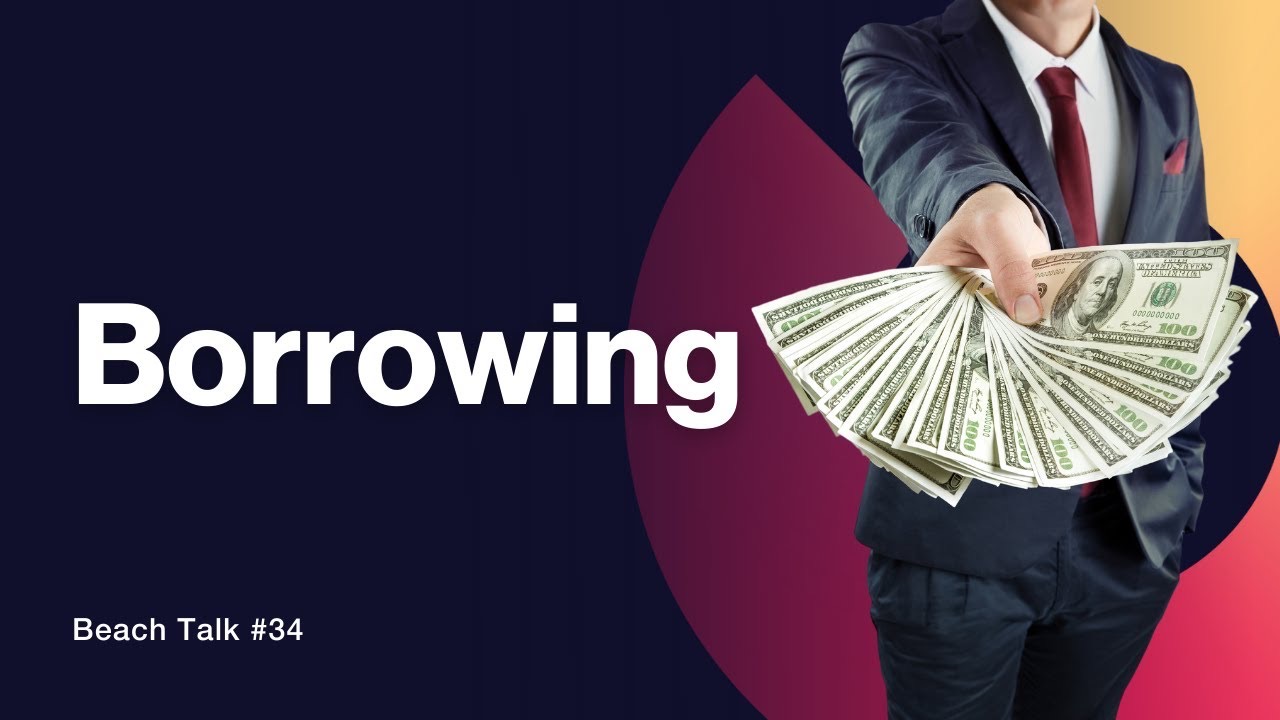
In this Beach Talk, Ciaran O'Donnell describes himself as debt-averse and explains the test he applies when a business he works with is deciding whether to borrow.
Where the rule comes from
One of the financial lessons that has stayed with Ciaran longest is a rule he credits to the author Seth Godin: only borrow to buy something that is going to go up in value. He read it just as he had moved from a flat to a house, with a first child and his wife on maternity leave. That is when the temptation to borrow, to finish a renovation or buy a car, is at its strongest. Borrowing is convenient, easy and well marketed. His own habit since is to use a credit card only as a convenient way of grouping spending and to pay it off in one go, and otherwise, if he wants something, to save up for it.
How the rule translates to a business
The businesses he works with fund themselves in three ways: many raise equity, many owners put their own money in, often as a director's loan to the company, and some borrow. Many of the businesses he saw hit by lockdowns came out carrying debt of varying sizes, from Bounce Back Loans and the Coronavirus Business Interruption Loan Scheme to money from friends and family.
A business is not buying a house, so the rule changes shape. The question becomes: what will this debt change? Ciaran sorts the answers into three:
- Debt to cover losses. In Ciaran's words, it is almost like a rescue package, just to keep the lights on.
- Debt to grow the cost base without adding profit. At some stage paying it back becomes expensive and difficult for your cash flow to manage.
- Debt that drives or improves profitability. Borrowing used to change something, or to restructure the business, so that repayments do not feel as if they are soaking up all the cash the profits produce.
Keeping an eye on cash while you decide
Ciaran's test is whether the borrowing changes something that improves profitability, so repayments do not soak up the cash the business produces. Separately, it helps to know where your cash stands week by week: your net cash and your cash cushion in months. Own Your Numbers works both out from your Xero every Monday, read-only. Note that a loan also adds a liability, so borrowing on its own does not raise net cash.
Business debt questions, answered briefly
Is it a good idea to take out a small business loan?
It depends on what the loan is for. Ciaran O'Donnell's test has three parts. Borrowing to cover losses is a rescue package. Borrowing to expand costs that do not add to the bottom line becomes expensive to repay. Borrowing that changes something to improve profitability is the kind worth considering.
What are the downsides of getting a business loan?
Repayments come out of your cash flow whether or not the borrowing worked. If the loan covered losses or grew costs without growing profit, paying it back can soak up the cash your profits produce and become difficult to manage.
Should I borrow money to cover business losses?
Ciaran calls that almost a rescue package, just to keep the lights on. His test is whether the borrowing will change something that improves profitability, so repayments do not soak up the cash the business produces.
When is business debt worth taking on?
When it changes something that drives or improves profitability, or helps restructure the business, so that repaying it does not swallow all the cash the business makes. Ciaran's starting point is the rule he credits to Seth Godin: only borrow to buy something that is going to go up in value.
14 days free · no card · read-only.